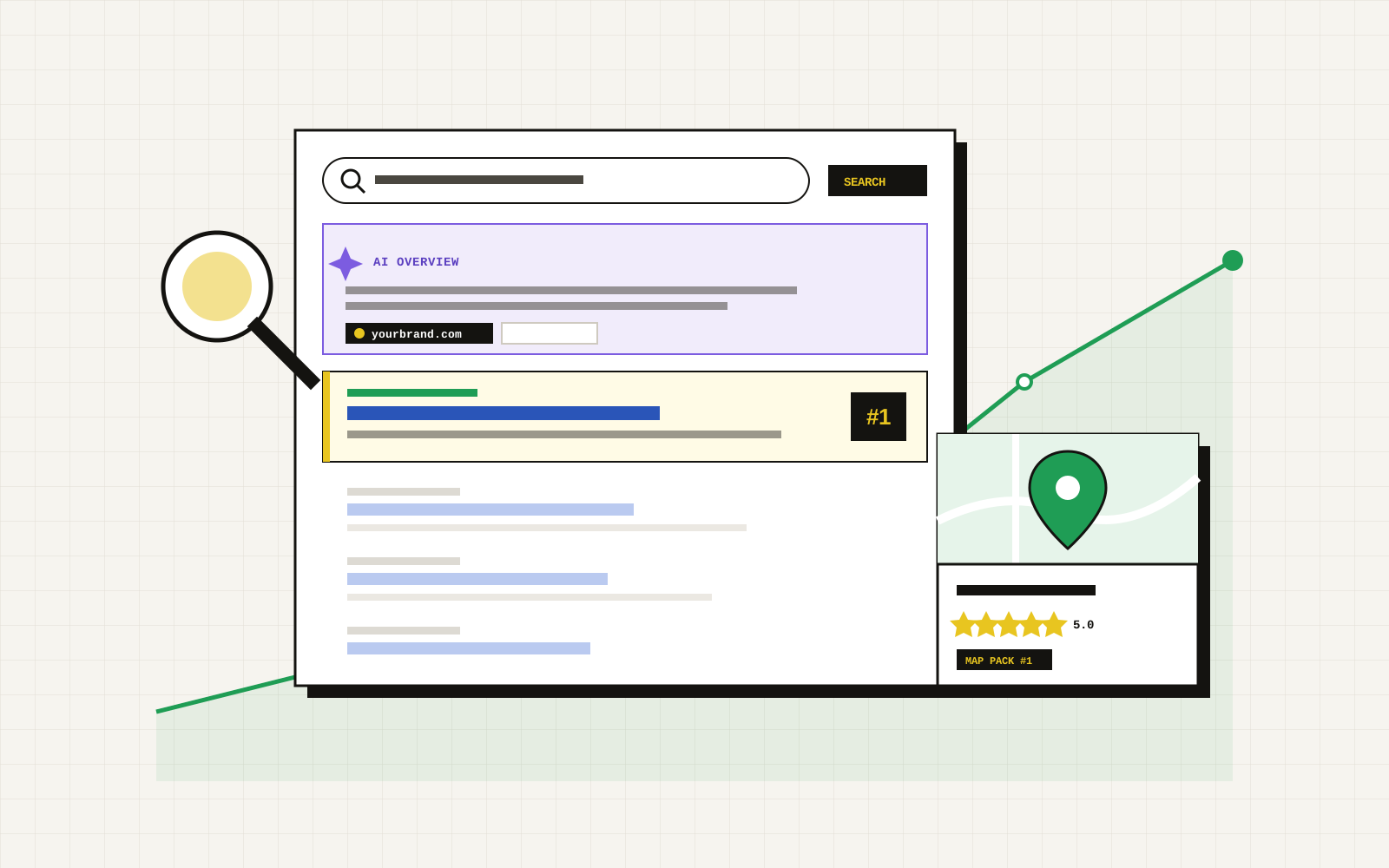

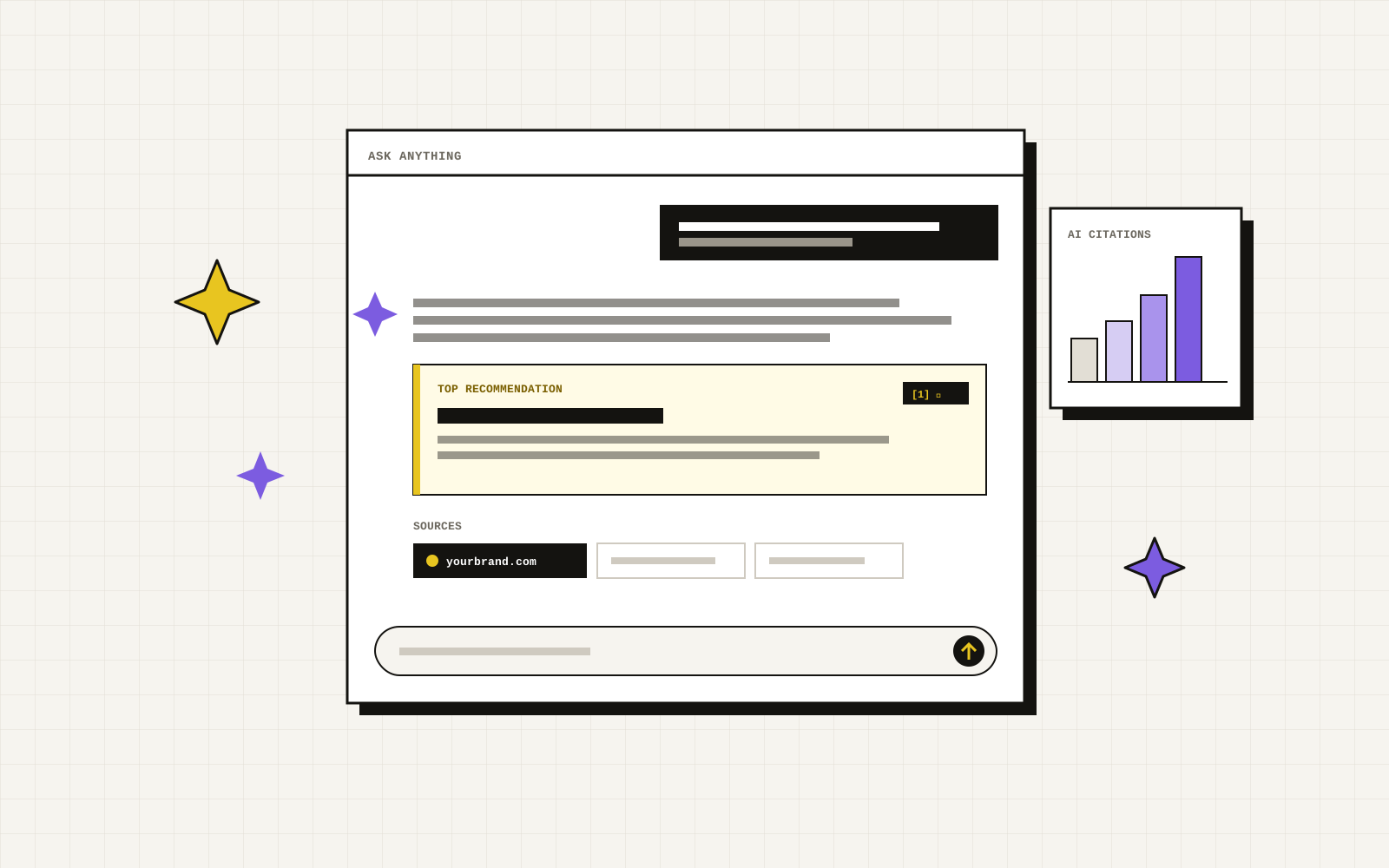
For twenty years, winning search meant ranking in the top three blue links. That game still matters, because AI tools pull much of their information from the same web pages Google ranks. But the buyer's experience has changed. Someone asking "who is the best roofer in Kendall for a flat roof?" increasingly gets a written answer with two or three named businesses, a short reason for each, and a handful of source links.
If your business is not one of those names, you never get the click. This guide explains how AI answers are assembled and what you can do about it this quarter.
How AI assistants decide who to mention
Large language models do not "rank" businesses the way a search engine does. When a question needs current, local or commercial information, assistants like ChatGPT, Gemini, Perplexity and Google's AI Overviews retrieve web pages first, then write an answer from what they found. Three things decide whether you appear:
- Retrievability. Can their crawlers reach and read your pages? Blocked bots, content hidden behind scripts and slow servers all reduce your odds.
- Clarity. Is it obvious what your company is, where it operates and what it does? Vague homepages ("we elevate brands") give a model nothing to quote.
- Corroboration. Do other sources agree with what you say about yourself? Reviews, directories, press, partner pages and industry lists act as confirmation.
The common thread is evidence. Assistants are built to avoid recommending things they cannot support, so the businesses that get named are the ones with consistent, specific, verifiable information across the web.
Step 1: make your business an unambiguous entity
Search engines and language models think in entities: a company, its founder, its services, its location. Your first job is to remove any doubt about yours.
- Use exactly the same business name, address and phone number on your website, Google Business Profile, Apple Business Connect, Bing Places, Yelp and industry directories.
- Add Organization and LocalBusiness structured data (schema.org) to your site, including your founder, service area, contact details and links to your official profiles.
- Create a real About page that names the people behind the company, their roles and their experience.
- Pick one clear description of what you do and use it consistently. "Miami digital marketing agency for SEO, web design and paid ads" beats a different slogan on every platform.
Step 2: publish pages that answer, not pages that announce
AI answers are built from passages. A page that opens with a clear, direct answer to a specific question is far easier to quote than a page that opens with a mission statement.
- Give each service its own page, and start it with a two-sentence summary of what it is, who it is for and where you offer it.
- Add the details buyers actually ask about: typical price ranges, timelines, what is included, what is not, and how the process works.
- Use question-style headings that match how people ask ("How long does a roof replacement take in Miami?") followed by a direct answer in the first sentence.
- Add comparison and decision content: "repair vs replace", "in-house vs agency", "WordPress vs Shopify". Assistants love content that helps someone choose.
- Mark up FAQs with FAQPage structured data so the question-and-answer pairs are explicit.
Step 3: earn corroboration from sources assistants trust
Your website is one source. Assistants look for agreement from others. The highest-value sources are usually:
- Review platforms with a steady flow of recent, detailed reviews (Google, plus the platform that matters in your industry).
- Local and industry directories, chambers of commerce and professional associations.
- Earned mentions: local news, podcasts, partner case studies, supplier "find an installer" pages, event listings.
- Your own expertise published elsewhere: guest articles, interviews, speaking pages.
Quality matters more than volume. Ten consistent, relevant mentions beat a hundred spammy directory listings.
Step 4: fix the technical basics that block AI crawlers
- Check your robots.txt and firewall rules. Many sites accidentally block GPTBot, ClaudeBot, PerplexityBot or Google-Extended. Decide deliberately which you allow.
- Make sure your key content is in the HTML, not only rendered by JavaScript after load.
- Keep pages fast and stable. Slow or timing-out pages are skipped.
- Submit an XML sitemap to Google Search Console and Bing Webmaster Tools. Bing's index feeds several AI products, so it is worth the ten minutes.
Step 5: measure what you can act on
AI answers vary by wording, location and time, so a single screenshot proves nothing. Instead:
- Write 20 to 40 prompts your real buyers would ask, mixing broad ("best SEO agency in Miami") and specific ("who can fix Google Business Profile suspension in Doral").
- Run them monthly across the main assistants and record whether you are mentioned, how you are described and which sources are cited.
- Track referral traffic from AI tools in Google Analytics 4 (chatgpt.com, perplexity.ai, gemini.google.com and similar referrers).
- Treat the cited sources as a to-do list. If a competitor keeps getting cited from a directory you are missing from, fix that first.
Which AI crawlers can reach your site
An assistant cannot cite a page it is not allowed to fetch. Open your robots.txt and check what you are blocking. The main user agents are:
- OAI-SearchBot and ChatGPT-User (OpenAI): used to surface and fetch pages in ChatGPT search answers. GPTBot is separate and relates to model training.
- PerplexityBot (Perplexity): crawls pages for its answer engine.
- Google-Extended: a control for whether Google uses your content to train Gemini models. It does not affect normal Google Search or AI Overviews, which use Googlebot.
- Googlebot and Bingbot: still the foundation. Google has said that the same SEO best practices apply to its AI features, and ChatGPT search draws on Bing-powered results among other sources.
Many sites block everything with a blanket rule or a security plugin without realising it. Decide on purpose which bots you allow, then test with a fetch tool or your server logs. If you also want the classic foundations covered, run through our technical SEO checklist.
What an answer-ready page looks like
Assistants lift passages, not whole pages. Write each section so it still makes sense when quoted on its own:
- Put the answer first. Under a question-style heading, give a one or two sentence direct answer, then the detail.
- Be specific and verifiable. Prices, timelines, service areas, licences and named results are quotable. "We deliver great service" is not.
- Avoid phrases that depend on context, such as "as mentioned above" or "our product". Name the thing.
- Show your sources. Link to the study, regulation or manufacturer page you are citing. Pages that cite credible sources and include real statistics are easier for assistants to trust.
- Keep one entity, many consistent signals. Your business name, address, services and founder should read the same on your site, Google Business Profile, directories and social profiles.
A realistic way to measure it
AI visibility is still hard to measure, and most vendor figures come from small, non-standard samples, so treat any single percentage with caution. What you can do reliably:
- Pick 20 questions a real customer would ask, such as "best emergency plumber in Coral Gables".
- Ask each one in ChatGPT, Gemini, Perplexity and Google every month, in a logged-out window.
- Record whether you are mentioned, cited with a link, or absent, and who is cited instead.
- Check referral traffic from
chatgpt.com,perplexity.aiand similar sources in your analytics.
Over a quarter, the trend matters more than any one answer, because responses vary from run to run. If you want this built and tracked for you, that is what our answer engine optimization and SEO teams do.
What not to do
- Do not publish hundreds of thin AI-generated pages. They dilute your site and give assistants nothing distinctive to cite.
- Do not stuff "best" and "top-rated" into every heading. Assistants weigh evidence, not adjectives.
- Do not abandon classic SEO. Most AI answers still lean on pages that rank well in normal search.
The short version
AI search rewards the same thing good marketing always has: being clearly, consistently and verifiably the best answer to a specific question. Make your business easy to identify, publish pages that answer real buyer questions, earn confirmation from other sources, and measure monthly. If you want a baseline of where you stand today, our free proposal includes an AI visibility check alongside the SEO audit.
Frequently asked questions
What is generative engine optimization (GEO)?
GEO, also called answer engine optimization (AEO), is the practice of making your content easy for AI assistants such as ChatGPT, Gemini, Perplexity and Google's AI Overviews to find, understand and cite. It builds on classic SEO: crawlable pages, clear entities, direct answers and corroboration from other trusted sources.
Is GEO different from SEO?
Mostly it is SEO with a stronger emphasis on direct answers, specific facts and third-party mentions. Google has said that the same fundamentals apply to its AI features. Pages that cannot be crawled or that say nothing specific will struggle in both.
Can I pay to be included in ChatGPT answers?
No. There is no way to buy a place in an organic AI answer. What you can influence is whether your pages are accessible, clear and corroborated by other sources, which makes you a more likely citation.
How long does it take to start appearing in AI answers?
It varies. Assistants that browse the live web can pick up a new or improved page within days or weeks, while changes that rely on broader reputation, such as reviews and press mentions, take months. Track a fixed set of questions monthly to see the trend.