
When every proposal turns into a discount conversation, it is tempting to blame the market, the economy or the sales team. More often the cause sits earlier in the journey: by the time a buyer talks to you, your brand has already told them you are one of several similar options. Comparable options get compared on price.
Vendor or authority?
A vendor sells a deliverable: a website, a roof, a tax return. Buyers judge vendors on price, speed and availability. An authority sells an outcome and a point of view: they understand the buyer's situation better than the buyer does, explain what to do and why, and have visible proof that it works. Buyers judge authorities on fit and confidence, and price becomes one factor among several.
Authority is not about being the biggest. Plenty of small firms charge more than large competitors because they are clearly the specialist.
Four moves from vendor to authority
1. Narrow your focus
"We do marketing for everyone" invites comparison with everyone. Specialise by industry (med spas, law firms), by problem (failed launches, lost rankings) or by customer type (family-owned, venture-backed). You can still accept other work. The brand simply leads with the specialism.
2. Name your method
Turn how you work into a named, explained process with clear stages and outputs. A method signals that results come from expertise, not luck, and gives buyers something to evaluate other than price.
3. Lead with proof
- Case studies with the problem, the approach and the result, told in the client's language.
- Reviews that mention specifics, not just "great service".
- Content that teaches, so buyers learn from you before they ever call.
- Recognisable clients, partners and credentials relevant to your niche.
4. Look the part, consistently
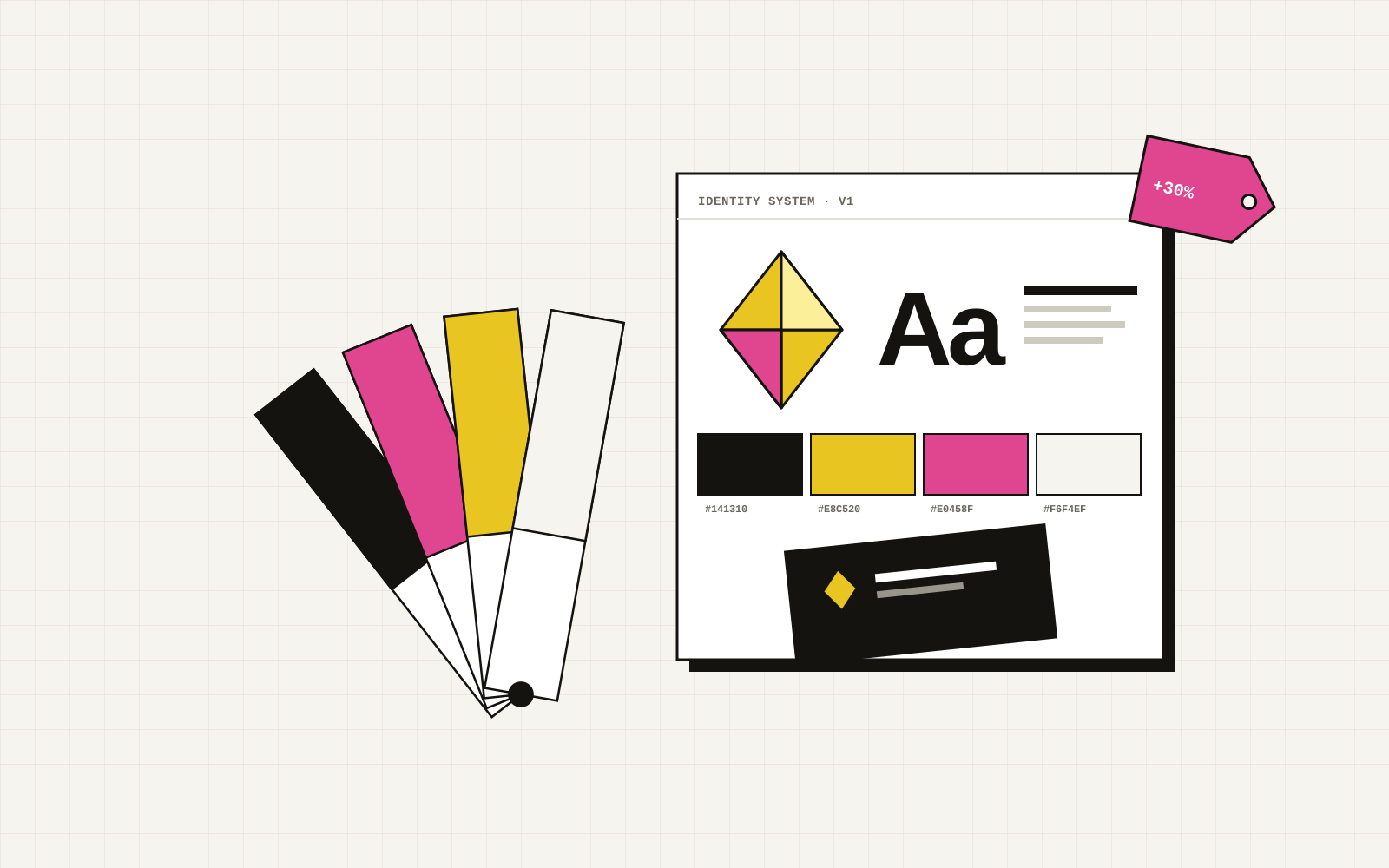
Identity matters, but it is the last step, not the first. Once positioning and proof are clear, a considered visual identity, a fast and specific website and consistent materials make the premium feel justified at every touchpoint.
Raising prices without losing good clients
- Package the offer clearly: what is included, the process, the outcome you are working toward.
- Introduce new pricing to new clients first. Their reaction is your best market test.
- Give existing clients notice and a reason: more senior attention, a better process, added reporting.
- Expect to lose a few price-driven clients. That frees capacity for better-fit work.
- Track win rate and average project value together. A small dip in win rate with a big rise in value is usually a good trade.
The math behind a price increase
Many owners fear a price increase will cost more in lost customers than it earns. You can check the real risk with one formula. The volume you can lose before a price rise leaves you worse off is:
price increase ÷ (gross margin + price increase)
At a 60% gross margin, a 10% increase breaks even even if you lose about 14.3% of your volume (10 ÷ 70). At a 30% margin, the same 10% increase breaks even at 25% volume loss (10 ÷ 40). Most businesses that raise prices on a clear offer lose far fewer customers than the break-even allows. The lower your margin, the more a small increase is worth.
How to raise prices well
- Raise for new customers first. Quote the new rate to every new inquiry. It tests demand with no risk to existing relationships.
- Bundle rather than just add. Package a clearer, more complete offer at a higher price instead of the same service with a bigger number.
- Give existing clients notice and a reason. Thirty to sixty days, a short note about what has improved, and a clear date. Consider a short grace period for your best long-term clients.
- Say the price plainly. Hesitation reads as doubt. State the number, then stop talking.
- Stop discounting as a habit. Constant promotions teach customers that the sale price is the real price.
Proof that supports a higher price
Buyers accept a higher price when they believe the outcome. Build a small body of proof: named results with numbers, a short case study for each main service, reviews that mention specifics, credentials and a clear process. Put the strongest piece above the fold (see the five-second test) and repeat it where people decide. If you advertise, track whether higher-priced offers still produce profit, using the method in connecting ads to real revenue. Our branding team helps businesses reposition before they reprice.
Where to start
Write one sentence that finishes "We are the best choice for ___ who need ___ because ___". If you cannot fill the blanks specifically, that is the work to do before any redesign. Our branding team runs this exercise in the first week of every positioning project.
Frequently asked questions
What is pricing power?
Pricing power is the ability to raise prices without losing a meaningful share of customers. It usually comes from differentiation customers can feel, a trusted brand, a clear outcome and some cost to switching.
How much can I raise my prices without losing customers?
There is no universal number. Work out your break-even volume loss (price increase divided by gross margin plus the increase) and test the increase on new customers first. Many businesses can raise prices more than they expect when the offer and proof are clear.
How does branding affect pricing?
A clear position tells buyers who you are for and what you do best, so they compare you on outcomes and trust rather than on the lowest quote. That moves the conversation away from price alone.
Should I tell existing clients before I raise prices?
Yes. Give 30 to 60 days' notice, explain what they get, and state the new price and date. Honest notice protects the relationship better than a surprise on the next invoice.